

How To Build An Altar
Every November, I find myself mesmerised by (and a bit envious of) the ancestral altars that bloom across most of Mexico. But how can I build something that contradicts what my faith teaches?

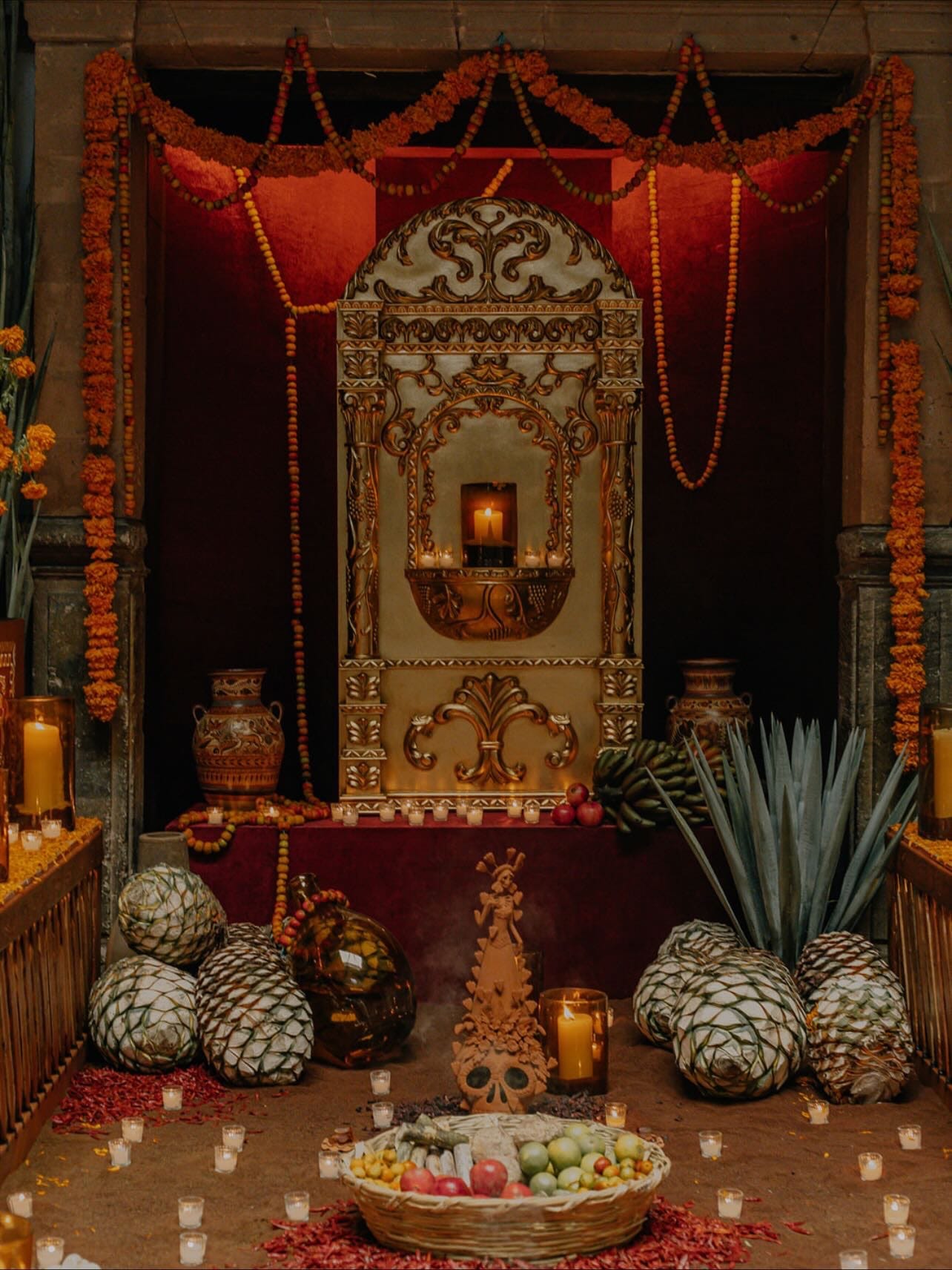
Every November, I find myself mesmerised by the ancestral altars that bloom across most of Mexico for Día de los Muertos — Day of the Dead. Tiny, dense universes of devotion. For two nights, the veil thins and these ofrendas become thresholds where ancestors tread back into the earthly realm.
Sepia-tinted photographs, sweet breads shaped like bones, and skulls splattered with colours that hush grief. Each object is both an invitation and communication. I wonder about the biographies of trinkets: who pressed them into whose palm, and how many generations have they witnessed?
I could sit before ancestral altars for hours,
reading the language of remembrance.
I am also envious. I want to build an altar to honour my own ancestors. But my lineage never taught me how.
Sikh philosophy teaches us not to cling to the physical body or burial sites after death, but to allow the soul to continue on its journey. By cremating rather than burying, we practice non-attachment to the material world and honour the notion that a person’s soul transcends the physical realm.
Having challenged my own thoughts around death rituals, I understand the wisdom in this teaching. I live by it. There is profound freedom in the release of everything material, in not trying to hold what never belonged to us. In this case, a soul.
At the same time, I’m captivated by photographs of my ancestors and remnants that connect me to my roots. I draw strength from knowing who shaped me, from touching objects that witnessed their lives.
So where does that leave me and my altar envy?
While writing this, I realised: although I do not invite my ancestors back, I do remember them.
In Ardaas, the Sikh prayer for the collective, we name and remember our Gurus, our martyrs, the brave Sikhs who held onto their faith and sacrificed everything for us to be here today. So perhaps the more accurate question is: “can I build a physical space that connects me to my ancestors without contradicting the philosophy of non-attachment I am devoted to?”
This introspection sent me back to the origins of altars – what they’re for, how different cultures use them, whether material devotion and non-attachment can actually co-exist.
Across civilisations, humans have gathered at altars for prayer, meditation, reflection, gratitude, protection, healing, clarity. The word “altar” comes from altus (height) and altare (to burn): an elevated platform where smoke rises, bridging earth and the divine.
My first big perspective shift around all of this is that altars aren’t only for celebrating the dead. Altars arise from the human need to give form to the formless – grief, devotion, gratitude, love. Perhaps this is why they endure. In a world that tugs relentlessly at our attention, the altar offers a still point, a space where the mind can pause, focus, and remember.
So, the answer is yes. I can build an altar. Not to call my ancestors back, but to tune my own awareness or plant an intention, and practice returning to it.
But I needed to figure out how to do this in a way that honours the teaching of my own lineage about non-attachment.
The idea here is not to copy and paste what you see in a Día de los Muertos altar. Building an ofrenda is a specific cosmology – a way of remembering that has survived centuries of colonisation and demonisation. It belongs to a lineage that has protected and passed down this practice through generations. Without that lived understanding, without that inheritance, building an ofrenda risks becoming performance. Or worse, extraction – taking the aesthetics without the roots, the beauty without the belonging.
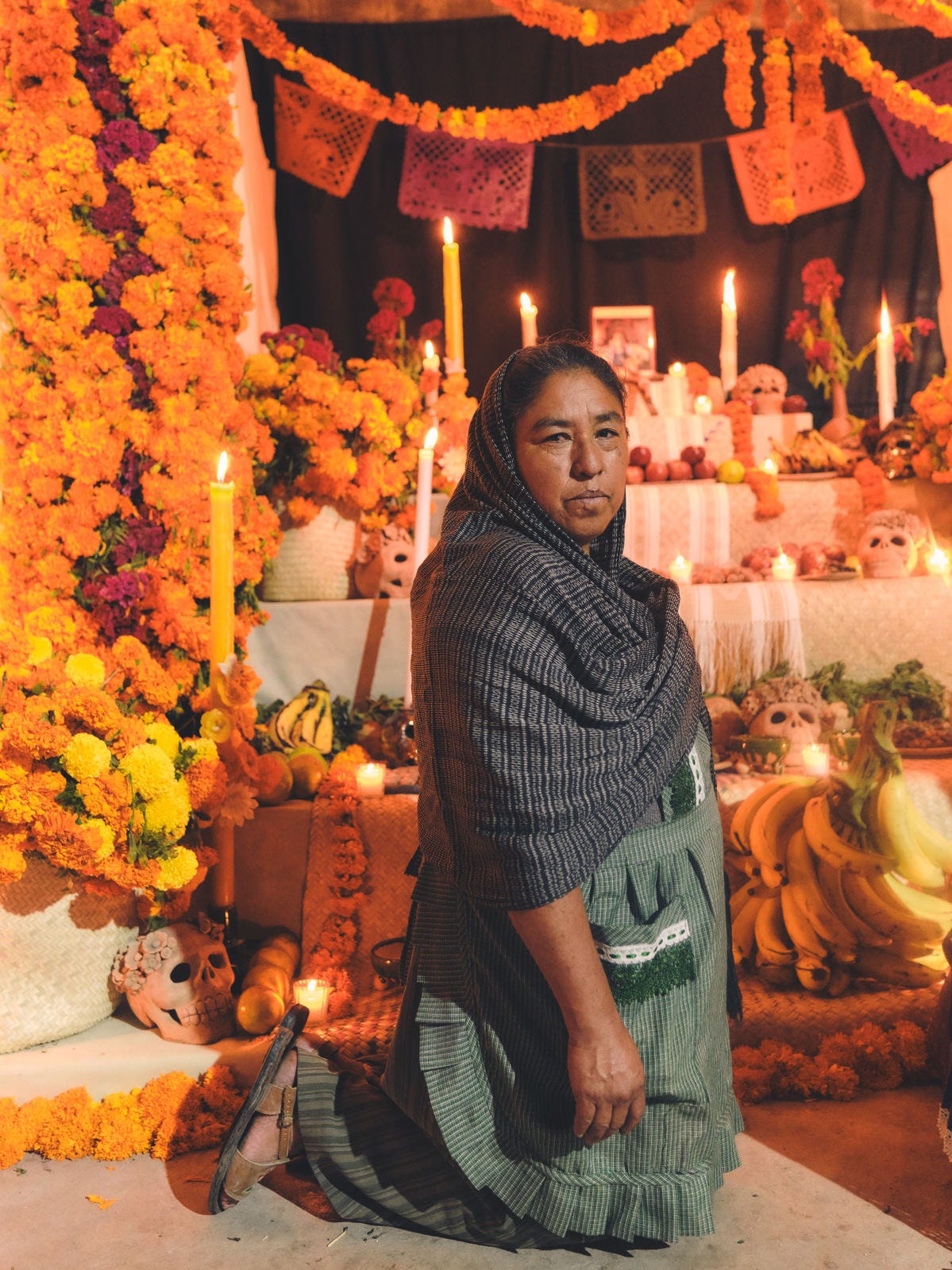
So here’s what I’m offering instead: a different approach to building an altar. Think of it not as a collection of meaningful objects, but as a container for conversation. At its most basic level, that’s what an altar is – a space for dialogue. Here are four conversations an altar can hold:
The Four Conversations
1. A conversation with what shaped you
Choose something that holds lineage. A photograph, an heirloom, an object that carries the people and forces that made you. This conversation says: I come from a long line of people. I didn’t arrive here alone.
2. A conversation with what you’re cultivating
Choose something that represents intention, what you’re growing toward. A seed. A word written down. A symbol of the person you’re becoming. This conversation asks: what am I cultivating? What needs my attention to grow?
3. A conversation with impermanence
Choose something that reminds you of the cyclical nature of life. Whether things you consume like fruit, things that wilt like flowers, things that can change state like water. This conversation reminds: Everything must (and will) change. My ability to accept, not resist, keeps me anchored in the present.
4. A conversation with what brings you awe
Choose something that represents whatever’s larger than you. This could be a pebble from a beach to remind you of the vastness of the ocean. Or a crystal that holds millions of years of stories to remind you of all the people and things that had to unfold for you to even exist. This conversation allows you to zoom out: I’m not the centre of everything. I never was. What a relief.
Preparing the Space
An altar can’t live somewhere you never go. Find a threshold you cross daily: beside your bed, or by a window light falls. Many people keep their altars on a tray or small table. Drape it with cloth to mark the space as intentional. Let the space become sacred.
An Invitation to Build
If you decide to engage in these four conversations, what objects will you choose? What intention are you seeding at your altar?
And remember — an altar untended becomes furniture. An altar cared for becomes a living conversation between you and what you hold sacred. Visit it often.
In reverence,
– Anoopreet Rehncy
This was so beautiful and inspiring! I too have always been fascinated but at odds with whether or not this contradicted my faith. I really appreciate your take on it and now I have to decide on an appropriate spot for mine 🙏🏽💫